Hearing Loss and Relationships
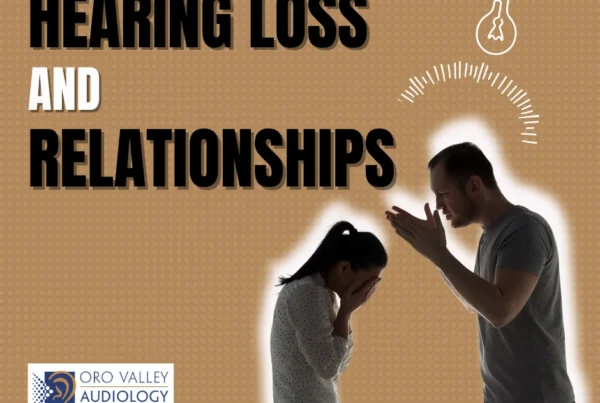
“He thinks I’m yelling, but I’m not. I’m trying to speak louder so he can hear me. But after raising my voice and repeating myself multiple times, he thinks I’m…



Call us at 520-825-4770 to make your appointment.
Our audiologists will evaluate your hearing to determine what kind of hearing aids work best for you.
We have the newest and best hearing aid technology available so we can choose what fits your lifestyle.

With great hearing, you can stay connected to the people who matter to you most.

We strive to always provide you with clear, exceptional care that goes beyond your expectations.
We use the best in hearing healthcare technology to ensure your hearing loss is treated with precision.

Our daily walk-in hours make it possible to check your hearing aids at a moment’s notice.






We believe if someone needs and wants to hear better, we can make it possible. Through our
local and global initiatives, we can provide
high-quality hearing healthcare that allows people here and across the world reconnect with their life.

We started Grace Hearing Center to provide unmet needs within our community. Our sliding-scale approach provides affordable hearing healthcare so no person is left with untreated hearing loss.

As partners with Entheos Hearing Cooperative, we serve people around the world so hearing healthcare is accessible for those who need it.
Click each service to learn more about how Oro Valley Audiology can help you take control of your hearing health.
This first step in a hearing evaluation is for the Audiologist to gather a case history to get a complete picture of your ears and hearing history, including information about cognitive screening, tinnitus and dizziness. The audiologist will then look in your ears using an otoscope to inspect the health of your ear canals and eardrums.
After ensuring your ear canals are clear, the Audiologist will take you into the sound booth to begin the hearing test. The testing consists of air and bone conduction thresholds, speech testing, and speech in noise testing and possibly tinnitus pitch and match testing if this was a problem you came to us to help treat. From the results of this testing, the Audiologist will determine the type and degree of hearing loss. The Audiologist will then go over the results to ensure you have a comfortable understanding of your hearing health, and provide treatment options. Learn More –>
Our hearing aid fitting process involves several steps to make sure hearing devices fit comfortably and are acoustically set for each individual’s prescriptive targets. This is accomplished by running Real Ear Measurements (REM). Once we are confident that the devices are programmed for each individual’s unique needs, we instruct on how to insert and care for the devices and connect the hearing aids to your phone/smart device (if applicable). At the end of the hearing aid fitting, a plan will be made for your follow up appointment. Learn More –>
Hearing aid selection is a complicated process because of the many types of hearing aid options that exist. After a comprehensive hearing evaluation to determine you are a candidate for hearing aids, we will work with you to determine the best solution, based on budget, lifestyle, and amplification needs. We work with all manufacturers, so we will find the best hearing aid for your lifestyle, cognitive and hearing needs. Learn More –>
Earwax, a bodily emanation that many of us would rather do without, is actually pretty useful – it is a natural cleanser as it moves from inside the ear canal outward, gathering dead skin cells, hair, and dirt. However, an ear canal plugged with earwax can cause earaches, infections, and other problems. We offer professional help to remove a blockage. We utilize different types of removal suction, irrigation, and manual depending on the type of wax and skin health. Learn More –>
Hearing protection is vital to prevent noise-induced hearing loss when a person is in a noisy environment. Hearing protection devices reduce the noise energy reaching the ears so that there will be less risk of damage to the hair cells in your inner ear. Earmuffs and earplugs are the most common types of hearing protection. Common types of hearing protection include those for concerts, factory/construction site work, and when using power tools. We supply foam type of earplugs with each visit when needed and we also can have custom hearing protection made with different filter options, solid and a range of colors!
Tinnitus is commonly referred to as ringing in one or both ears; the presentation can vary widely from person to person. Some people report crackling, buzzing, or different noises. Tinnitus may occur after loud noise exposure, like a concert, or a person may only notice the tinnitus when they are in a quiet space. Tinnitus is often accompanied by hearing loss, so it is important to get your hearing tested if you are experiencing tinnitus. Hearing aid fitting many times will help alleviate the tinnitus, but if not we do provide patient-specific Tinnitus counseling as well. There are more specific tinnitus, handicap, and depression questionnaires along with mindfulness, sound generators, CBD oils, and other counseling tools. Dr. Judy Huch is the expert in tinnitus and can take this aspect of care if more intense tinnitus counseling is needed. Learn More –>
To help determine what underlying medical condition may be causing ringing in your ears (or tinnitus), you will need a comprehensive hearing evaluation. Be sure to inform your audiologist, ENT, or PCP of all medications you are taking because tinnitus can be a side effect of some drugs. The most common treatment for ringing in the ears is amplification, or hearing aids if hearing loss is also present. Other treatments for ringing in the ears are sound therapy, tinnitus retraining therapy (TRT), Mindfulness techniques and CBD oils (with no THC). Learn More –>
Hearing loss treatment will vary based on the type and degree of hearing loss presented. For example, an ear impacted with wax will have conductive hearing loss that will be corrected when the earwax is removed. Depending on the test results, a patient may be referred to an Ear, Nose, and Throat physician for a medical consult regarding their hearing loss. The most common type of hearing loss is sensorineural and in most cases is treated with amplification. It is very common for people to wait too long in addressing their hearing loss and this may have an adverse effect on their cognitive health. We want your ears to pick up the sound that is needed for your brain to do the work it is designed to do. Learn More –>
Our earmold fitting and selection process will depend on the type, degree of hearing loss, and the anatomy of the ear. The earmold can be canal size (small), half-shell size (medium) or full-shell size (large).
The kind of earmold you wear also depends on your personal preference, the shape and texture of your ear, and your specific hearing aid. The customization process which includes ear impressions or digital ear scans of your ear canal and outer ears. The impressions and/or scans will then be sent to a lab, where they will customize earmolds for you.
Meniere’s disease is a disorder of the inner ear that can lead to dizzy spells (vertigo), tinnitus, and hearing loss. In most cases, Meniere’s disease affects only one ear. It is considered a chronic condition; various treatments can help manage symptoms and minimize the long-term impact on your life. If you are having signs and symptoms of Meniere’s Disease it is important to undergo comprehensive otologic, vestibular, and audiological testing to determine the cause of your symptoms and treatment options.
Vertigo is the sensation that the world is spinning around you. To determine the cause of your vertigo you will need to undergo a comprehensive vestibular exam by an audiologist. Treatment for vertigo depends on what’s causing it. Vestibular rehabilitation may be recommended if you have recurrent bouts of vertigo. Canalith repositioning maneuvers may also be done to move calcium deposits out of the ear canal. If vertigo is caused by an infection or inflammation, antibiotics and steroids may be prescribed by an ENT to reduce swelling and inflammation.
Ear impressions are a model of the outer ear and ear canals. Our clinic will reproduce the shape of your ears using medical-grade silicone, and/or a 3D Digital Scan of your ear canals, which is crucial to the building of your perfect fitting custom In-the-Ear monitors and earplugs. A well-fitting earmold helps prevent feedback whistling from the hearing aid by preventing sound leakage, so make sure to book with the experts. Schedule an appointment with us to get ear impressions done for custom earpieces.
We want to protect your hearing while still letting you perform, play and enjoy the music. Our clinic offers consultations and impressions for In-Ear-Monitors (IEMs), devices used by musicians, audio engineers, and audiophiles to protect their hearing while still being able to enjoy the music. We use a state-of-the-art and personalized process to ensure a perfect fit for your IEMs. We are preferred providers for IEMs labs and can help you select the lab that is right for your needs and budget.
Our custom-made earplugs allow you to safely enjoy listening to and playing your favorite music. Unlike foam earplugs that muffle the sound quality, our Musician Earplugs are specially engineered to preserve the quality and clarity of the music. Our custom-made earplugs are molded specifically to your ear shape. This means you get the best protection and quality of sound as well as the comfort only custom-made earplugs can give. There are also different type of filters that are used depending on your specific musical needs which can be changed out.
We provide Otoacoustic Emissions (OAE) screening, a vital hearing screening tool that can be used in a variety of health and education settings. It is an objective test that can determine if the hair cells in your cochlea are functional. Our clinic also uses otoacoustic emissions to validate behavioral or electrophysiologic auditory thresholds and to assess cochlear function relative to the site of the lesion.
Oro Valley Audiology offers Real Ear Measurements (REM); we know how important it is to accurately measure a hearing aid’s intensity (volume) and frequency response (pitch) inside each individual’s ear canal. During REM testing, a thin probe-tube microphone is inserted into the ear canal alongside the hearing aid. We obtain readings of the exact sound levels the user is receiving from the hearing aid while listening to various recorded speech samples to ensure that the hearing aid is meeting the individual’s prescriptive targets.
All of the hearing doctors at Oro Valley Audiology follow Dr. Cliff’s best practices. Get in touch with Dr. Copeland, Dr. Huch, or Dr. Kim!
Our purpose is to give you back the relationships you care about. Visit our homepage to learn more about us!

© 2024 Oro Valley Audiology. | Privacy Policy | Terms of Service | Sitemap